
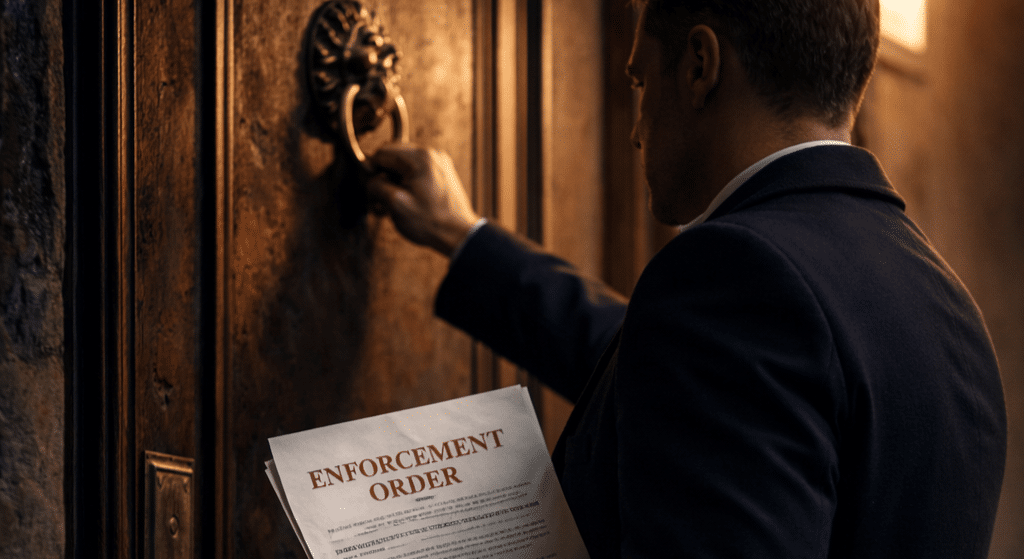
Unpaid commercial debts are one of the most damaging and disruptive problems facing businesses in England and Wales. Late or non-payment causes serious cash flow difficulties, strains supplier relationships, and can threaten the financial viability of an otherwise sound business. According to figures from the Chartered Institute of Credit Management, UK businesses collectively write off billions of pounds in bad debt every year, with a disproportionate impact on small and medium-sized enterprises who lack the resources to absorb sustained non-payment.
The law, however, provides a powerful arsenal of remedies to enforce payment of commercial debts, from pre-action correspondence and court proceedings through to statutory demands, winding-up petitions, and a range of post-judgment enforcement tools. The key is to act swiftly and strategically. Delay is rarely in the creditor’s interest, and the Limitation Act 1980 imposes strict time limits within which legal action must be commenced. Once that window closes, even a clear and undisputed debt becomes legally unenforceable.
This guide sets out the complete commercial debt recovery process in England and Wales for 2026, explaining each stage from first steps through to enforcement. Whether you are owed £5,000 or £5 million, the principles are the same: take prompt legal advice, follow the correct procedural steps, and deploy the most appropriate remedy for the circumstances of your case.
Check Your Litigation Case ✔
We analyse your case prospects. We deliver strategic legal advice at your first fixed fee meeting. We get optimal legal results. Want our opinion on your case? Click below or call our lawyers in London on ☎ 02071830529
What Is Commercial Debt Recovery?
Commercial debt recovery refers to the legal process of enforcing payment of money owed by one business to another (B2B) or by a business to a creditor under a commercial contract. It is distinct from consumer debt collection, which is governed by additional regulatory frameworks under the Financial Conduct Authority. Commercial debt recovery encompasses unpaid invoices, breach of contract claims, dishonoured cheques, overdue trade credit, and any other situation where a business or individual has failed to meet a clear financial obligation.
The process involves pre-action steps designed to resolve disputes without litigation, court proceedings to obtain a binding judgment, and enforcement mechanisms to compel payment. A creditor who approaches this process with proper legal strategy, and ideally with specialist solicitors and barristers, will maximise both the speed and the quantum of recovery. Importantly, under the Late Payment of Commercial Debts (Interest) Act 1998, creditors are entitled not only to recovery of the principal debt but also to statutory interest and fixed compensation on top of the sum owed.
Step 1: Pre-Action Protocol
Before issuing any court claim for a debt, a creditor must comply with the Pre-Action Protocol for Debt Claims (effective from 1 October 2017). Failure to do so can result in adverse costs consequences even where you ultimately succeed in court. The protocol requires the creditor to send a formal Letter Before Claim (LBC) setting out the nature and value of the debt, the basis upon which it is claimed, the deadline for payment (no less than 30 days), and information about the debtor’s options.
In practice, a well-drafted LBC from experienced litigation solicitors often achieves payment without any proceedings needing to be issued. A letter that clearly sets out the creditor’s legal position, the interest accruing under the Late Payment of Commercial Debts (Interest) Act 1998, the firm’s intention to issue proceedings immediately on expiry of the deadline, and a warning of potential insolvency proceedings in appropriate cases, tends to concentrate the debtor’s mind considerably.
The Late Payment of Commercial Debts (Interest) Act 1998
The Late Payment of Commercial Debts (Interest) Act 1998 confers a statutory right to interest at 8% per annum above the Bank of England’s base rate on late commercial debts. This is a powerful tool because it applies automatically unless the parties’ contract provides a ‘substantial contractual remedy’ for late payment. In addition to interest, the Act entitles a creditor to a fixed compensation sum as follows:
- £40 for debts under £1,000
- £70 for debts between £1,000 and £9,999
- £100 for debts of £10,000 or more
These sums are recoverable in addition to the debt itself and any interest. In many commercial disputes, the combination of statutory interest at 8% above base rate and fixed compensation substantially increases the sum recoverable, providing additional leverage in negotiations. Where the debtor has behaved unreasonably in withholding payment, the court may also make an award of additional costs.
Step 2: Issuing Court Proceedings
If payment is not forthcoming following the LBC, the next step is to issue a court claim. The appropriate court and track will depend on the value of the claim:
- Claims up to £10,000: Small Claims Track in the County Court. Costs recovery is limited, making legal representation less cost-effective at this level unless the matter is complex.
- Claims between £10,001 and £25,000: Fast Track. Proportionate costs recovery available. Most straightforward commercial debts in this band are resolved quickly.
- Claims over £25,000: Multi-Track. Full costs recovery in the event of success. High-value claims may be issued directly in the High Court (Business and Property Courts) where the sum exceeds £100,000 or the matter is particularly complex.
Once a claim is issued, the defendant has 14 days to acknowledge service and a further 14 days (28 days from service in total) to file a defence. If no defence is filed, the claimant may apply for default judgment, a significant and relatively swift remedy in straightforward debt cases. Where the defendant acknowledges service but the claim is nonetheless unanswerable on the facts and law, the creditor’s solicitors can apply for summary judgment under CPR Part 24, disposing of the case without a full trial.
LEXLAW’s litigation team has extensive experience in both issuing and defending commercial debt claims across all tracks. Our dual-qualified solicitors and barristers ensure that every aspect of the claim, from the particulars of claim through to advocacy at any contested hearing, is handled with precision.
Step 3: Enforcing a Judgment Debt
Obtaining a judgment is one thing. Enforcing it is another. Many creditors are frustrated to discover that a judgment in their favour is not self-executing. Where a debtor refuses or is unable to satisfy a judgment voluntarily, the judgment creditor must take active enforcement steps. The principal enforcement mechanisms available in England and Wales are as follows.
Charging Orders
A charging order under the Charging Orders Act 1979 secures a judgment debt against the debtor’s property, shares, or other assets. Once the charge is registered, the creditor effectively has a form of mortgage security. An order for sale can then be sought to realise the asset. Charging orders are particularly powerful where the debtor owns property, they turn an unsecured debt into a secured one, preventing the debtor from disposing of the asset without first satisfying the debt. LEXLAW’s litigation solicitors can obtain charging orders swiftly and efficiently in appropriate cases.
Third Party Debt Orders
A third party debt order (formerly known as a garnishee order) is a mechanism under CPR Part 72 to freeze and redirect funds held by a third party, most commonly a bank, for the benefit of the judgment creditor. An interim order is obtained without notice, immediately freezing the funds. A final order then directs the bank to pay the sum over to the creditor. This is one of the most effective enforcement tools where the debtor holds funds in a known bank account. For advice on third party debt orders and other enforcement mechanisms, see our guide to
Attachment of Earnings Orders
Where the debtor is an individual in employment, an attachment of earnings order under the Attachment of Earnings Act 1971 directs the employer to deduct a specified amount from the debtor’s wages and pay it to the court for onward transmission to the creditor. This remedy is primarily suited to consumer debt or personal guarantees against individuals, rather than pure B2B commercial debt.
High Court Enforcement Officers (HCEOs)
Where a County Court judgment for a debt of £600 or more is transferred up to the High Court, a High Court Enforcement Officer (HCEO) can be instructed to attend the debtor’s premises and seize assets (goods) under a writ of control. HCEOs are experienced enforcement agents with wide powers and can act very quickly. The threat and reality of enforcement action by HCEOs often prompts prompt payment.
Using Insolvency Proceedings as Commercial Debt Recovery Leverage
For creditors owed clear and undisputed sums, insolvency-based remedies can be among the most powerful, and fastest, routes to recovery. The threat of formal insolvency proceedings concentrates the minds of debtors and their directors in a way that civil debt proceedings alone often cannot, since insolvency carries severe personal and commercial consequences.
Statutory Demands
A statutory demand is a formal written demand for payment of a debt that, if unsatisfied within 21 days, creates a legal presumption of insolvency. For companies, under section 123(1)(a) of the Insolvency Act 1986, a company that fails to comply with a statutory demand for a sum exceeding £750 is deemed unable to pay its debts and may be wound up. For individuals, a statutory demand that is unsatisfied within 21 days forms the basis for a bankruptcy petition under the Insolvency Act 1986, provided the debt exceeds £5,000.
Statutory demands are a significant step and must be used responsibly. They should only be deployed where the debt is genuinely undisputed, that is, not subject to a bona fide dispute on substantial grounds. Misuse of the statutory demand process, for example to pressurise payment of a disputed debt, can result in the demand being set aside and the creditor facing an adverse costs order. LEXLAW advises clients thoroughly on the appropriate use of statutory demands.
Winding-Up Petitions for Company Debts
Where a company fails to satisfy a statutory demand or judgment debt, a creditor owed at least £750 may present a winding-up petition to the Companies Court. This is a drastic remedy, the presentation of a petition is a matter of public record and can destroy a company’s banking relationships and commercial standing overnight. For that reason, the courts scrutinise winding-up petitions carefully. In the leading case of Re Bayoil SA [1999] 1 WLR 147, the Court of Appeal confirmed that a petition will be dismissed or stayed where the debt is genuinely disputed on substantial grounds. More recently, in Salford Estates (No.2) Ltd v Nicholson [2014] EWCA Civ 1575, the Court of Appeal held that the court will ordinarily grant a stay of winding-up proceedings in favour of contractual arbitration where the underlying dispute falls within an arbitration clause.
For specialist advice on winding-up petitions, whether you are issuing a petition to recover debt or defending against one presented by HMRC or another creditor, see windinguppetitionsolicitors.co.uk, LEXLAW’s dedicated resource for company insolvency proceedings.
Bankruptcy Petitions for Individual Debts
Where the debtor is an individual rather than a company, and the debt exceeds £5,000, a creditor may present a bankruptcy petition. Bankruptcy is a serious legal status with far-reaching consequences for the debtor, including restrictions on credit, loss of assets to the trustee in bankruptcy, and potential disqualification from certain roles. LEXLAW advises creditors on the strategic use of bankruptcy petitions and can also advise debtors facing petitions on their options, including setting aside statutory demands or negotiating settlements to avoid a bankruptcy order.
Key Case Law in Commercial Debt Recovery
A creditor’s legal strategy should always be informed by relevant case law. The following decisions are of particular significance in the context of commercial debt recovery in England and Wales.
- Jetivia SA v Bilta (UK) Ltd [2015] UKSC 23: The Supreme Court confirmed that claims between companies in the context of insolvency can be pursued by a liquidator notwithstanding the involvement of the company’s own directors in the wrongdoing giving rise to the debt. This case is relevant in commercial fraud and insolvency-related debt recovery scenarios.
- Re Bayoil SA [1999] 1 WLR 147: A foundational Court of Appeal authority confirming that winding-up petitions must not be used as a debt collection tool where the underlying debt is genuinely disputed. Creditors must ensure their debt is clear and undisputed before presenting a petition.
- Salford Estates (No.2) Ltd v Nicholson [2014] EWCA Civ 1372: Established that where a contract contains an arbitration clause, the court will ordinarily stay insolvency proceedings pending arbitration even if the petition debt is undisputed. Commercial creditors should check their contract terms before issuing insolvency proceedings.
- Philips v Symes [2006] EWCA Civ 654: A High Court decision providing important guidance on costs penalties where a party has failed to comply with pre-action protocols. The case underlines the importance of following correct procedural steps before issuing proceedings.
How LEXLAW Can Help You Recover Your Commercial Debt
LEXLAW Solicitors & Barristers is a specialist litigation firm based at Middle Temple, the ancient Inn of Court located in the heart of the City of London, adjacent to the Royal Courts of Justice. We are the only law firm in England and Wales to operate from professional legal chambers within the Inns of Court, providing our clients with direct access to experienced solicitors and barristers working in close collaboration.
Our commercial debt recovery team advises businesses of all sizes, from SMEs pursuing a single unpaid invoice to multinational corporations managing large portfolios of bad debt. We provide strategic, results-focused advice that is tailored to the specific circumstances of each matter. Around 97% of our litigation cases settle before trial, a testament to the quality of our pre-litigation negotiation and strategic advice.
We offer a discounted fixed fee initial conference at which a solicitor and barrister will review your papers, assess your prospects of recovery, and advise you on the most cost-effective strategy for your particular case. This includes advice on pre-action options, the strength of your claim, limitation issues, available enforcement mechanisms, and whether insolvency proceedings are appropriate in your case.
First-class Second Opinions ✔
Discounted fixed fee advice.
Need a second opinion on how your litigation is progressing? Need advice on whether your case is suitable for alternative dispute resolution? Our solicitors & barristers can help by assessing your case prospects- at any stage in your ongoing litigation (or contemplated proceedings). We have dual-qualified lawyers, so if our view is your case has limited merit or high risk we warn you in our first meeting.
Some firms offer free meetings with unqualified or junior lawyers and only after you’ve spent more do you get advice from a senior partner or barrister possibly that the case shouldn’t be pursued.
We do things differently from all other law firms in England & Wales. We offer you partner and counsel-led advice in our first meeting, for a heavily discounted fixed fee. That way our best solicitors and barristers can review your case and give you the correct advice at the outset, when it matters the most.
Legal advice is just one aspect of getting a solution. The most important thing is what you do with the legal knowledge about your case, how you present it to the other side and how you negotiate your way to the optimal legal settlement. Our lawyers are masters of strategically securing optimal litigation settlement.
Want your case assessed or a second legal opinion? Call ☎ 02071830529 or message our London litigators: