Tag: Banks

Financial Conduct Authority FCA UK Logo - LEXLAW Litigation Law Firm in London

‘FCA Review’ of Interest Rate Hedging (IRHP) Sales: Written Statement or ‘Fact Find’ Interview?

The FCA/FSA Hedging Review is conducted by the banks, not the regulator, and involves recorded interviews or fact-find meetings with customers. These interviews can be one-sided, with the bank’s lawyers asking questions designed to limit compensation. Customers often have limited rights to access bank records or challenge questions. A written statement, prepared with legal guidance, can be a safer way to present the sales experience without the risks of interviews.

The Parliamentary Commission on Banking Standards’ Final Report calls for radical reforms to restore banking trust, addressing LIBOR manipulation and derivatives mis-selling. Key proposals include criminal liability for reckless bankers, improved governance, stronger regulator duties, and wider access to the Financial Ombudsman Service for small businesses. The report also urges greater financial literacy, transparency, and regulation to prevent banks from disclaiming advisory responsibility when selling complex products like interest rate swaps. Lexlaw supports clients affected by such mis-selling and advocates for fairer banking practices. Contact Lexlaw for expert legal advice and representation.

The Banking Commission’s Proposals relevant to Swaps Mis-selling

The Parliamentary Commission on Banking Standards’ Final Report calls for radical reforms to restore banking trust, addressing LIBOR manipulation and derivatives mis-selling. Key proposals include criminal liability for reckless bankers, improved governance, stronger regulator duties, and wider access to the Financial Ombudsman Service for small businesses. The report urges greater financial literacy, transparency, and regulation to prevent banks from disclaiming advisory responsibility when selling complex products.

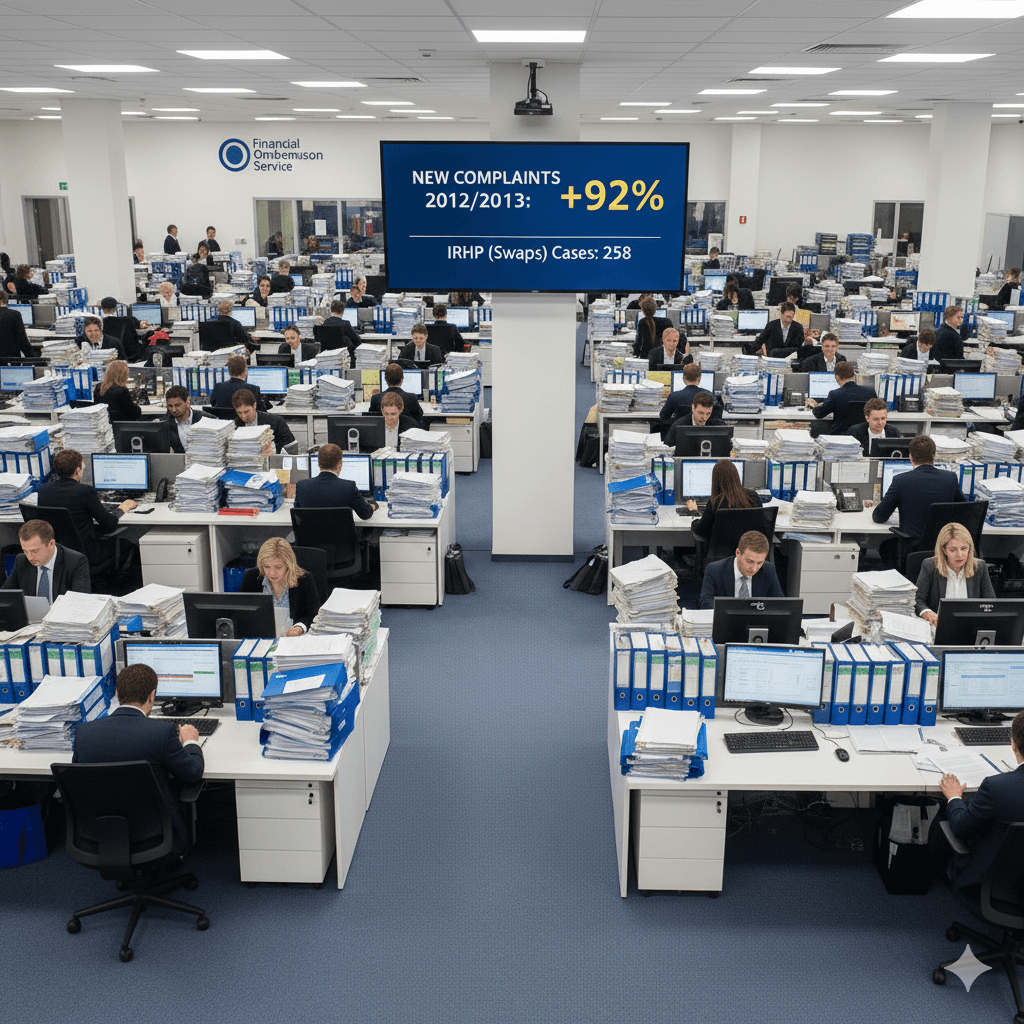
The Financial Ombudsman Service (FOS) saw a 92% rise in new complaints in 2012/2013, with 258 cases related to interest rate hedging products (IRHPs) like swaps. However, the FOS can only handle complaints from microenterprises, excluding many small businesses. The FOS also has a £150,000 compensation cap, often insufficient for these claims. The FSA rejected setting up a special scheme for wider IRHP complaints, leaving the FOS as a last resort after bank reviews. Lexlaw advises clients to seek legal help early to avoid limitation issues and ensure full redress.

Swaps Complaints in the Financial Ombudsman Service Annual Review for 2012/2013

The Financial Ombudsman Service (FOS) saw a 92% rise in new complaints in 2012/2013, with 258 cases related to interest rate hedging products (IRHPs) like swaps. However, the FOS can only handle complaints from microenterprises, excluding many small businesses. The FOS also has a £150,000 compensation cap, often insufficient for these claims. The FSA rejected setting up a special scheme for wider IRHP complaints, leaving the FOS as a last resort after bank reviews.

The Court of Appeal ruled unanimously in RBS v Highland Financial Partners EWCA Civ 328 that RBS procured a previous judgment by fraud, deliberately withholding key documents and misleading their client, lawyers, and the court. The case involved a “sham auction” of loans to create a notional £1.44 billion profit. The judgment raises serious concerns about RBS’s corporate culture and litigation conduct. Contact Lexlaw for expert legal support on complex banking disputes and mis-selling claims.

RBS v Highland Financial Partners: Culture of denial at RBS?

The Court of Appeal ruled unanimously that RBS procured a previous judgment by fraud, deliberately withholding key documents and misleading their client, lawyers, and the court. The case involved a “sham auction” of loans to create a notional £1.44 billion profit. The judgment raises serious concerns about RBS’s corporate culture and litigation conduct.

lexlaw litigation solicitors in london lawyers professional negligence

The Times: Banks’ secretly settling swaps mis-selling cases

The Times Newspaper reports that banks are secretly settling swaps mis-selling cases with small businesses, often on the eve of court proceedings. These settlements are kept confidential, and the banks often make public statements denying wrongdoing. The number of claims is increasing as businesses become aware of the issue. Businesses argue that the swaps were too complex and that banks failed to explain the risks involved.

RBS announced a £700 million provision for Interest Rate Hedging Products (IRHP) mis-selling in their 2012 results, a 1300% increase from the previous £50 million. Despite this, RBS downplays its role in the scandal, highlighting court wins and Financial Ombudsman rulings in its favour, which contrasts with the FSA finding over 90% of such products mis-sold. The provision remains inadequate given the scale of affected non-sophisticated customers. Lexlaw advises anyone affected by RBS swaps mis-selling to seek independent legal counsel promptly. [1](https://lexlaw.co.uk/solicitors-london/rbs-announce-results-provision-for-swaps-mis-selling-increased-by-1300/)

RBS Announce Results: Provision for Swaps Mis-selling Increased by 1300%

RBS announced a £700 million provision for Interest Rate Hedging Products (IRHP) mis-selling in their 2012 results, a 1300% increase from the previous £50 million. Despite this, RBS downplays its role in the scandal, highlighting court wins and Ombudsman rulings in its favour, which contrasts with the FSA finding over 90% of such products mis-sold. The provision remains inadequate given the scale of affected non-sophisticated customers.

Barclays announce 2012 results – Provision for swaps mis-selling £850 million

Barclays Bank announced an £850 million provision for interest rate hedging product (swaps) mis-selling in 2012, with around 4,000 affected customers, approximately 3,000 deemed non-sophisticated. This suggests an average provision of £280,000 per customer. Lexlaw estimates that total liabilities for major banks, including Barclays and RBS, could reach several £billion pounds.

dark and secretive aspects of LIBOR manipulation at RBS, aiming to convey the sense of illicit activity, cultural failures, and the impact of the fine

RBS fined for LIBOR Manipulation; will lead to increased LIBOR Litigation

RBS was fined £87.5 million by the Financial Services Authority for manipulating the London Interbank Offered Rate (LIBOR), a key interest rate affecting trillions in derivatives contracts. This fraudulent activity, dating back to at least 2006, involved traders adjusting rates to benefit trading positions, causing losses to counterparties. This highlights serious cultural and oversight failures at RBS and other banks and will trigger increased LIBOR-related litigation.

The FSA’s definition of sophistication for swaps mis-selling reviews is complex and has caused confusion due to inconsistent communications. The original test deems a business sophisticated if it meets two of three criteria: turnover above £6.5m, balance sheet over £3.26m, or more than 50 employees. A new £10 million test modifies this for certain businesses, affecting their inclusion in the review. Clarification is expected from the FSA. Lexlaw offers expert advice to help businesses understand and navigate these rules. Contact Lexlaw for assistance with swaps claims.

What is Sophistication in the FSA Swaps Mis-selling Scheme?

The FSA’s definition of sophistication for swaps mis-selling reviews is complex and has caused confusion. The original test deems a business sophisticated if it meets two of three criteria: turnover above £6.5m, balance sheet over £3.26m, or more than 50 employees. A new £10 million test modifies this excluding them from the FSA review.

Here's an image depicting the FSA's pilot review findings for swaps mis-selling. It shows a scene with financial professionals looking concerned over documents, charts highlighting high mis-selling rates, and subtle visual cues indicating inadequate explanations, undisclosed costs, and over-hedging. The overall tone conveys seriousness and the implications of regulatory failure.

FSA Findings on Banks’ Pilot Swaps Mis-selling Review

The FSA’s pilot review of swaps mis-selling reveals over 90% of sales did not meet regulatory standards, highlighting inadequate risk explanation, undisclosed break costs, and over-hedging. Banks prioritised commissions over clients’ interests. The proposed review process raises concerns about reviewer independence and incomplete redress. Lexlaw advises court action before limitation periods expire.