
Category: Default Judgment

An illustrative graphic representing international trade finance, featuring a cargo ship, a freight plane, a globe, and secured financial documents with green checkmarks and a padlock icon, alongside stacks of cash.

Bank Refused Payment Under a Letter of Credit? Legal Rights in UK and International Trade

A letter of credit is a powerful trade finance instrument that protects both buyers and sellers by reducing payment risk in domestic and international transactions. When structured correctly, it provides certainty of payment, improves cash flow, and limits exposure to counterparty default.

London skyline (Houses of Parliament/Big Ben) with a cracked insurance contract, a bundle of Pound Sterling cash, and a symbolic broken chain. Represents the UK Court of Appeal ruling confirming COVID-19 business interruption cover and rejecting insurer arguments on causation

Insurers Lose Appeal on COVID-19 Business Interruption Cover (At-the-Premises Disease Clauses)

The Court of Appeal in London International Exhibition Centre plc v Allianz & Ors [2024] EWCA Civ 1026 upheld the High Court’s ruling that policyholders can recover COVID-19 business interruption losses under “at the premises” disease wordings, holding that each case of COVID-19 at the insured premises formed part of the concurrent cause of national closure orders.

CCjs debt recovery london litigation lawyer solicitor barrister CFA no win no fee dba limitation period

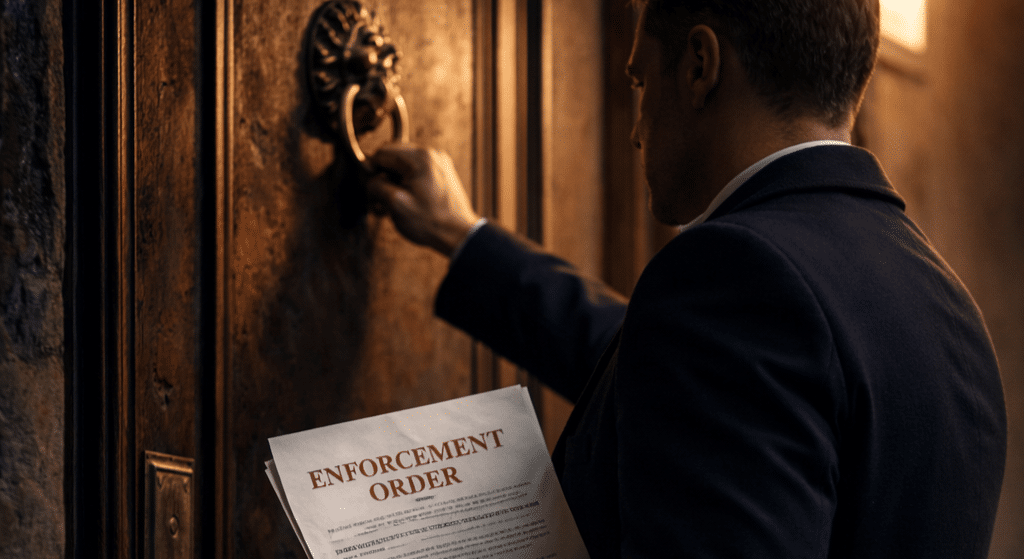
Creditor’s Guide to Enforcement of Unpaid & Old Court Judgment Debts in the UK (2025)

Contrary to common belief, unpaid High Court & County Court judgments (CCJs) do not always become unenforceable after six years. With proper legal procedures and court permission, creditors can successfully enforce judgment debts many years old.

maxim moskalev wins UK legal case Moskalev v Yanishevskiy (BR-2020-000554) Solicitors London

Client Case Study: Moskalev wins against Yanishevskiy for improper Statutory Demand

The Respondent to an application to set aside a statutory demand must bear the costs of the application, even if they withdrew the demand shortly after the application was filed.

litigation; interim remedy; default judgment; CPR; set aside; application; london

Judgment set aside: Unfair to serve on empty offices in COVID-19 and prospects of successful defence

The High Court set aside a default judgment because the Claim Form had been served on “empty offices” during the COVID-19 lockdown. Despite the Claimant’s solicitors attempts to engage in pre-action correspondence and check requirements for service, the Court was satisfied that the Defendant showed real prospects of successfully defending the claim.