
Category: Tax Law

HMRC, Security Notice, Notice of Requirement, NOR, Tax Tribunal, Lexlaw, Tax Disputes, Director Liability, VAT Security, PAYE Security, Revenue Protection, Michael Duma, Harriot Rockey, Keith Gordon, Tax Litigation Solicitors.

Case Study: HMRC Security Notices Overturned – Duma & Rockey v HMRC (Tax Tribunal Appeal)

We are the leading firm representing Directors and Companies facing HMRC Security Notices and we regularly succeed on behalf of clients. Here, our counsel successfully fought HMRC Security Notices that sought to impose over £215,000 in personal liability for VAT and PAYE debts. The case is a landmark victory against HMRC Notices of Requirement to give Security.

Digital cityscape at dawn highlighting a modern office building with overlaid financial charts and a glowing path, representing HMRC Time to Pay negotiation and structured tax repayment in 2026.

HMRC Time To Pay Guide 2026: Instalments for Unpaid Tax

A HMRC Time to Pay (TTP) arrangement lets businesses spread unpaid tax over manageable monthly instalments. In 2026, with HMRC enforcement increasing, well-prepared TTP proposals backed by financial evidence help avoid winding-up petitions, protect directors, and keep businesses trading.

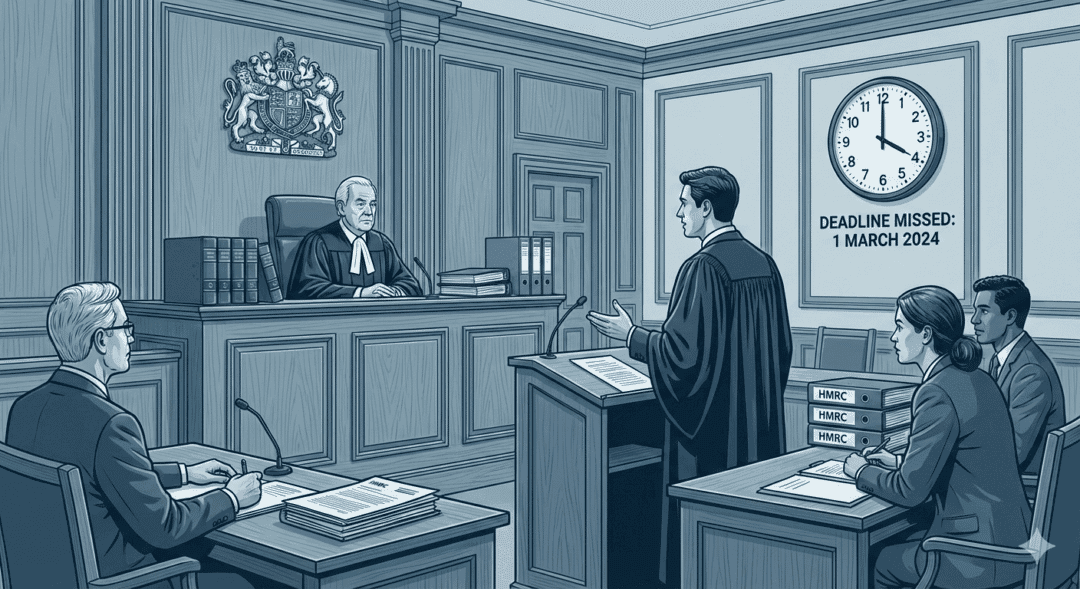
Missing your HMRC tax tribunal appeal deadline doesn't mean your case is over. The Upper Tribunal's landmark decision in Medpro v HMRC fundamentally changed how tribunals approach late appeals, moving away from the strict Martland framework that previously barred most out-of-time applications. Today, tribunals weigh all circumstances equally—delay length, reasons for lateness, and your case's strength—rather than treating deadlines as near-absolute barriers. This shift opens new pathways for taxpayers with meritorious claims, but success depends on understanding the evolving rules and acting strategically. This guide explains the current tribunal landscape and your practical options.

Late HMRC Tax Tribunal Appeals: Medpro, Martland & Your Options

Under the old Martland rules missing a tax tribunal appeal deadline meant case closure as time limits were treated as virtually absolute. The Upper Tribunal’s 2025 decision in Medpro v HMRC restores judicial discretion and elevates case merits. Taxpayers with credible explanations now have a realistic path to rescuing late appeals. Understanding the shift and presenting your circumstances effectively to a tribunal, could mean the difference between recovering a valid claim and losing it permanently.

insolvency bankruptcy petition lawyer debt defence solicitor

Case Study: Bankruptcy Order Annulment Victory Following HMRC’s Defective Service

We successfully annulled a bankruptcy order against our client after HMRC failed to properly serve notice of a key hearing. Mr. Gaster proved this procedural error denied him the chance to present evidence of his ability to pay. The court’s judgment emphasized due process under Rule 10.23 of the Insolvency Rules 2016, exposing flaws in HMRC’s conduct and evidence on the adjournment notice.